Graphic source: AccuWeather
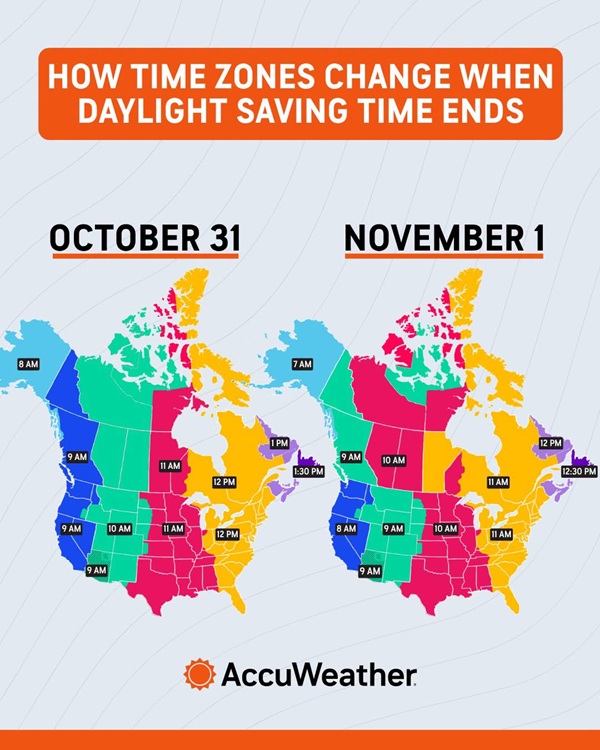
A new graphic highlights how Manitoba’s move to permanent Daylight Saving Time could affect time differences across the country after the seasonal clock change would normally take place.
For the first time, Manitobans will not be turning their clocks back this fall.
With the province now committed to permanent Daylight Saving Time, Manitoba will remain on the same clock year-round, eliminating the twice-yearly ritual of changing clocks in the spring and fall.
While many residents welcome the end of the time change, the move could create some new challenges when it comes to coordinating schedules with other parts of Canada.
The graphic above illustrates one possible scenario following November 1, the period when clocks would traditionally return to standard time. Under that example, 10:00 a.m. in Brandon could correspond to 7:00 a.m. in British Columbia, 9:00 a.m. in Alberta and Saskatchewan, 11:00 a.m. in Ontario and Quebec, and 12:30 p.m. in Newfoundland and Labrador.
One of the biggest changes for Manitobans would involve Saskatchewan. While the neighbouring province remains on Central Standard Time year-round, Manitoba’s move to permanent Daylight Saving Time would place it one hour ahead of Saskatchewan throughout the winter months.
The shift could affect everything from business meetings and travel plans to television schedules, sporting events and cross-border commerce between the two Prairie provinces.
It’s important to note that future time differences across Canada could still change depending on whether other provinces and territories decide to maintain seasonal clock changes or adopt permanent daylight or standard time.
For now, however, one thing is certain: Manitoba residents will no longer have to remember to change their clocks twice a year.
WHAT TIME IS IT, CANADA?
Manitoba’s Permanent Daylight Saving Time Plan Could Shift Time Differences Across Canada
EXAMPLE: IF IT’S 10:00 A.M. IN MANITOBA
British Columbia
7:00 a.m.
Alberta
9:00 a.m.
Saskatchewan
9:00 a.m.
Manitoba
10:00 a.m.
Ontario
11:00 a.m.
Quebec
11:00 a.m.
Atlantic Canada
12:00 p.m.
Newfoundland & Labrador
12:30 p.m.
WHAT’S CHANGING?
• Manitoba would remain on Daylight Saving Time year-round
• No more spring or fall clock changes
• Saskatchewan would remain one hour behind Manitoba
• Time differences with other provinces could shift
• Travel, sports broadcasts and meetings may require closer attention
IF IT’S 10:00 A.M. IN BRANDON
7:00 a.m. in Vancouver
9:00 a.m. in Regina and Saskatoon
11:00 a.m. in Toronto
12:30 p.m. in St. John’s
NOTE
This graphic is illustrative only. Saskatchewan observes Central Standard Time year-round and would remain one hour behind Manitoba. Time differences elsewhere in Canada will depend on decisions made by other provinces and territories regarding daylight saving time.